Sex in the World of Myth by David Leeming
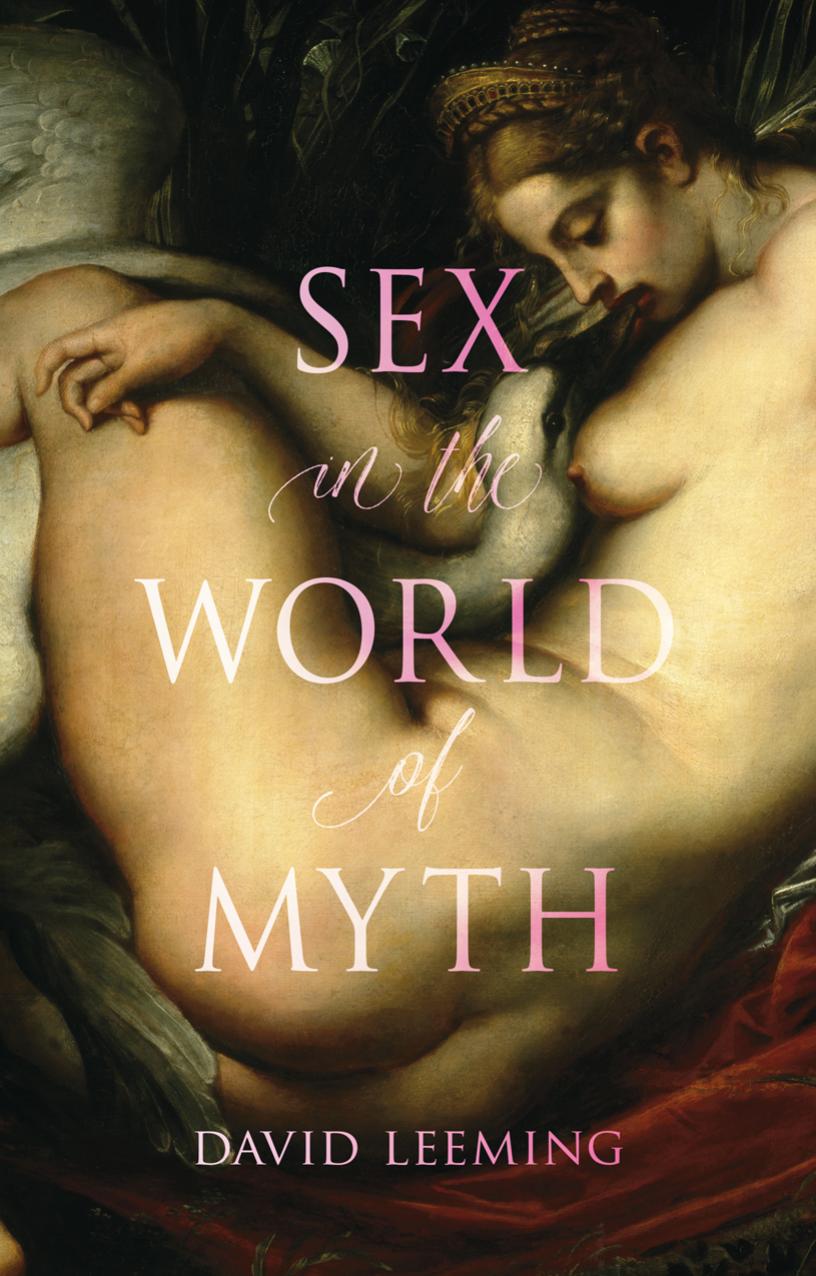
Author:David Leeming
Language: eng
Format: epub, pdf
Publisher: Reaktion Books
Oliver Shepherd, The Death of Cuchulainn (with Morrigan as a raven), 1911, bronze sculpture.
Welsh Mythology
Celtic mythology in Wales is even more corrupted by later influences than that of the more isolated Ireland. There are, of course, oral sources, including attributions to the mythical poet-prophet Taliesen, the Welsh equivalent of the Irish Amairgen. But Welsh mythology as we know it is essentially contained in the medieval collection known as the Mabinogion or Mabinogi, found in two fourteenth-century manuscripts, the White Book of Rhydderch and the Red Book of Hergest. The Mabinogion, divided into four ‘Branches’, is probably based on oral narratives that took literary form in the eleventh and twelfth centuries under strong Christian influence. The Four Branches are concerned with the Children of Don, the Welsh equivalent of the Tuatha De Danaan. Other than the Branches there are a group of independent tales, several involving King Arthur’s court.
As in Irish mythology, sex – certainly explicit sex – plays a relatively minor role in the Mabinogion. In keeping with the Celtic tradition, however, the marriage union of kings with fertility goddesses does remain a dominant theme. In the First Branch, King Pwyll is sitting on his throne mound when a beautiful woman rides by on a white horse. Immediately captivated, he gives chase to the woman, who finally stops, revealing herself as the goddess Rhiannon, perhaps the Welsh form of the Gaulish horse goddess Epona. After several near disasters, Pwyll and Rhiannon are married, and a son, the Welsh hero Pryderi, is born.
The Second Branch of the Mabinogion also concerns marriage, this one a tragic union between Branwen, the brother of the giant Bran, both children of the Welsh King Llyr (Lir, Lear) by Iwweriadd (Ireland) or by Penardun, the daughter of the Mother Goddess Don. Branwen herself is sometimes considered a love goddess. She is betrothed to King Matholwch of Ireland, a marriage that points back to the tradition of the King of Ireland in union with the goddess as Sovereignty. In fact, Branwen gives birth to Gwern, who is given the title of ‘Sovranty’ of Ireland, signalling a union of the Celtic lands of Ireland and the Wales of Branwen and Bran. The union deteriorates when the evil Efnisien brings about enmity between the Irish people and Branwen, causing the giant Bran to form a bridge between the two countries to allow an invasion of Ireland. After the ensuing war, only five pregnant Irish women, seven Welshmen and Branwen, who soon dies of a broken heart, are left.
The Third Branch also concerns marriage, between Pryderi and Cigva and Pryderi’s mother, the widowed goddess Rhiannon, and a son of King Llyr, the wise Manawydan. These marriages are plagued by malicious forces that would deny the proper union of king and goddess, but eventually the family prevails.
The Fourth Branch concerns sexual relationships, this time among the gods, the Family of Don themselves. It is a story of incest, deception and misogyny more in keeping with the tales of the Greek gods than of the myths usually associated with the Celtic deities.
Download
This site does not store any files on its server. We only index and link to content provided by other sites. Please contact the content providers to delete copyright contents if any and email us, we'll remove relevant links or contents immediately.
| Anthropology | Archaeology |
| Philosophy | Politics & Government |
| Social Sciences | Sociology |
| Women's Studies |
The Great Music City by Andrea Baker(33608)
Cecilia; Or, Memoirs of an Heiress — Volume 1 by Fanny Burney(32718)
Cecilia; Or, Memoirs of an Heiress — Volume 2 by Fanny Burney(32083)
Cecilia; Or, Memoirs of an Heiress — Volume 3 by Fanny Burney(32063)
We're Going to Need More Wine by Gabrielle Union(19167)
All the Missing Girls by Megan Miranda(16686)
For the Love of Europe by Rick Steves(14901)
Pimp by Iceberg Slim(14788)
Bombshells: Glamour Girls of a Lifetime by Sullivan Steve(14215)
Norse Mythology by Gaiman Neil(13564)
Talking to Strangers by Malcolm Gladwell(13535)
Fifty Shades Freed by E L James(13346)
Mindhunter: Inside the FBI's Elite Serial Crime Unit by John E. Douglas & Mark Olshaker(9515)
Crazy Rich Asians by Kevin Kwan(9415)
The Lost Art of Listening by Michael P. Nichols(7615)
Enlightenment Now: The Case for Reason, Science, Humanism, and Progress by Steven Pinker(7422)
The Four Agreements by Don Miguel Ruiz(6912)
Bad Blood by John Carreyrou(6727)
Weapons of Math Destruction by Cathy O'Neil(6465)
